Landing pages are an important aspect of digital marketing conversion: its point is to urge the visitor to take one action only. That action may be grabbing a free guide, joining an email list, or purchasing.
But with that much riding on your landing page, you might be asking yourself, “How much does it cost to build one?” Let’s Discuss How much does a landing page cost in 2024 in this blog briefly.
The average cost of Landing Design prices ranges from 100$ to 4000$ depending upon the client requirements and the features in landing page. Some landing pages are just used for collecting user information and some landing pages are used for conversion like sales and shopping type actions from users.
What Influences Landing Page Design Prices?
Landing Page Design Prices are affected by a lot of things. Here’s typically what affects the cost:
Complexity of Design: Simple, static pages cost less than those with intricate animations, interactive elements, or multiple sections.
Custom graphics: These take more design time than most of your other illustrations and photos, so I charge a higher price to cover that—plus my increased time dealing with uploading, formatting, etc.
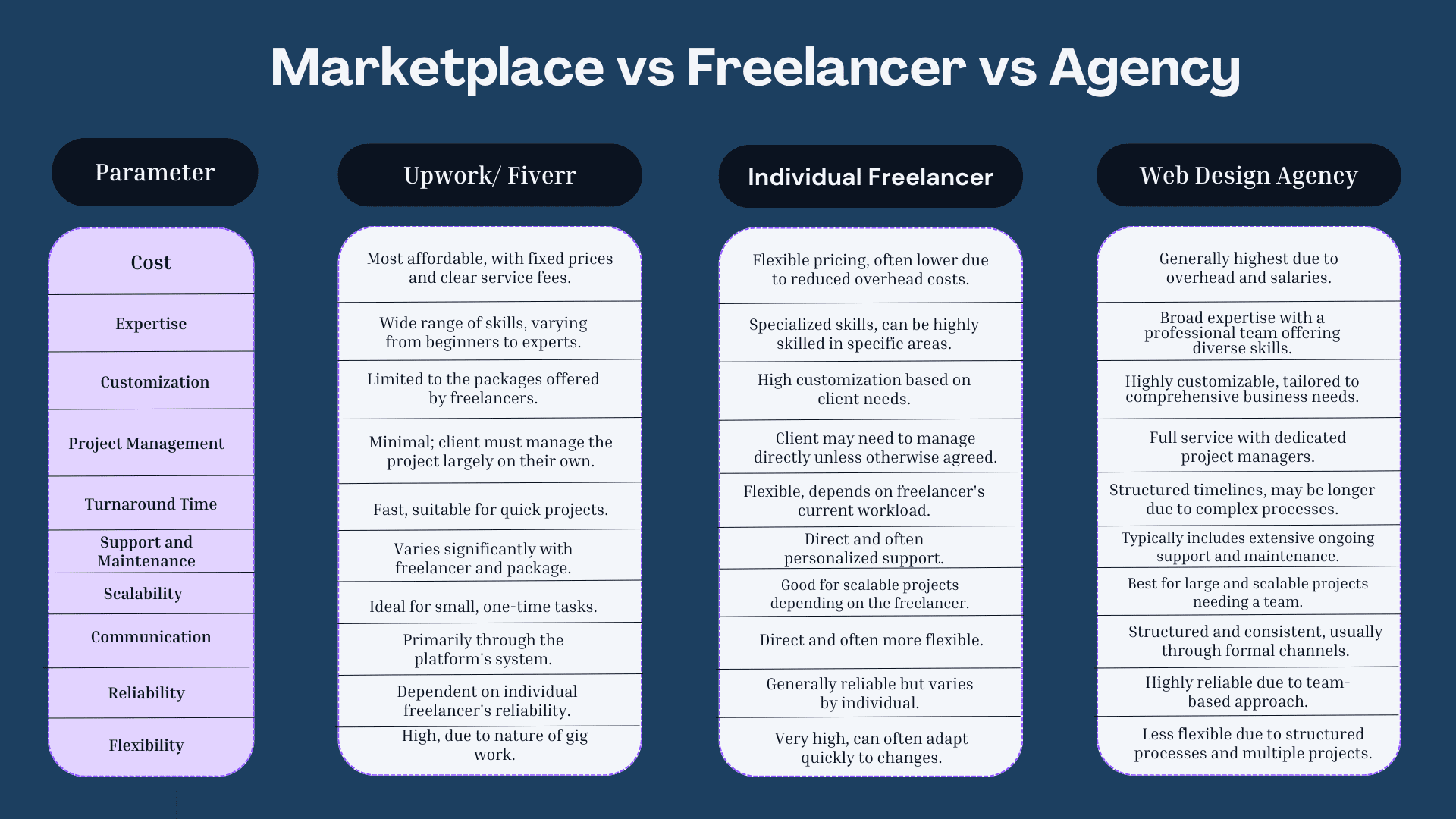
Expertise: Of course, a more experienced expert will charge more than newbies in this field. Freelancer vs. Agency: It should be noted, however, that the whole gamut of servic from copywriting to development comes prefixed with the word “premium,” unlike in the case of solo freelancers.
Price Breakdown: From Template to Custom Design
The cost of your landing page lies in the level of customization you desire. Let’s explore the options available,
1. Off-the-Shelf Templates
Pros:
Extremely affordable and easy to use, often with drag-and-drop interfaces.
Wide variety of pre-designed templates catering to different industries and goals.
Perfect for simple landing pages with a limited budget.
Cons:
Limited customization options: you’re restricted to the design elements and functionalities offered by the template.
Generic look and feel: your landing page might resemble others using the same template, impacting brand recognition.
May lack advanced features like custom animations or integrations.
Price Range: $0 – $100 (may require a subscription to a landing page builder platform, e,g, AI landing Page Builders)
2. Semi-Custom Templates
Pros:
Offer more flexibility with options to adjust layouts, colors, and fonts.
Often include pre-built elements like forms, buttons, and call-to-action sections.
More cost-effective than fully custom designs.
Cons:
Customization capabilities are still limited compared to a fully custom design.
May require some technical knowledge to modify the template effectively.
Might not be suitable for complex landing pages with unique functionalities.
Price Range: $200 – $1,000 ( e.g. WordPress developer customazing colors,size and arrangement of different elements present in a template )
3. Fully Custom Design Templates
Pros:
Complete control over every design aspect, ensuring a unique and brand-aligned landing page.
Allows for incorporation of complex features, animations, and interactive elements.○ Optimized for conversions based on user research and A/B testing.
Cons:
Highest cost option on the pricing spectrum.
Requires a longer development time compared to templates.
The project’s success heavily relies on the designer’s expertise and understanding of your vision.
Price Range: $1,500+ (highly variable depending on project complexity, e.g. Templates Designed on Figma)
Average Costs of Landing Page Designs Across Different Geographies
Designing landing pages can vary widely in cost, depending on the location of the designer or agency, with the prices charged highly dependent on economic indicators and market conditions.
As for all USA and UK based freelancers and agencies, charge premium rates in most cases, ranging between $50 and $150 per hour, and several thousands of dollars up to $5k to $10k for complete page setup with design.These high costs, taking everything into account, represent the high costs of living and doing business in the areas. Clients from this country are usually those who want very sophisticated services. For example, deep research, a lot of revisions in design, and very strong A/B testing.
As in Asian Countries like India and Bangladesh, the service provided by experts in landing page design costs much less, for example, in countries like India and Bangladesh. The hourly rate for freelancers working on the job varies between $10 and $30, with agencies providing comprehensive services quoting between $200 and $2,000.
Startup on a Budget
A young startup on a bootstrap might look like they’re hiring top freelancers from Eastern Europe to get a designer with a killer portfolio and experience in their niche at less than half the price an agency would offer.
Global E-commerce Giant
If an e-commerce business is quite well-established and has a good following around the world, it will tend to want several landing page each localized towards that specific region. They could engage a design agency with a distributed workforce, using designers drawn from different locations to design culturally relevant landing pages—and possibly still pay less compared to hiring from a single agency within a high-cost area.
Understand geographical impact on your landing page design prices and sourcing talent in order to strike a balance between cost-effectiveness and quality for your project.
The Niche Factor in Landing Page Cost
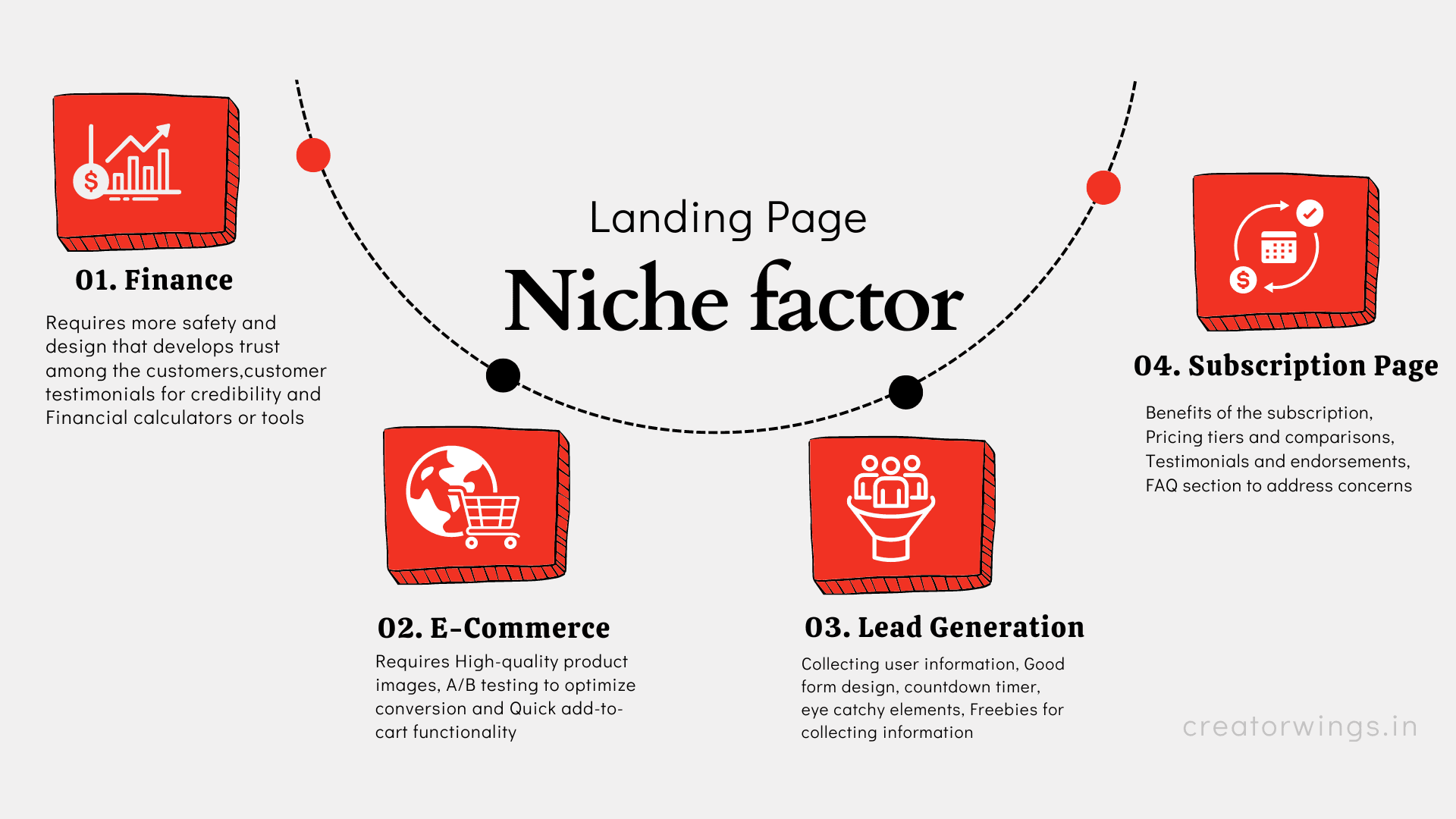
The target audience from an industry or niche perspective can strongly influence pricing. For example, the finance industry might bring compliance and security features that make your design more expensive.
Here’s why both industry and niche matter. This can widely depend on the market segment, but relate to data security or user privacy very strictly with relevant regulations in finances, health care, or legal services.
Landing pages within these areas may include two-factor authentication, secured payment gateways, or forms with encryption, among other things. All of the above requires special knowledge and time for development, therefore increasing the price.
In many of these very competitive sector e-commerce, travel, etc. A/B testing to optimize conversion can become a must. And from that can stem the need to actually design different variants of landing pages featuring different layout structures, calls to action, or even messaging content. Naturally, this all adds to the overall project cost.
However, some businesses and industries are very much in need of building and gaining trust. A landing page that offers financial advice or luxury goods might need a slicker design, portraying an air of authority and gaining trust. One way to add that level of polish is through high-quality visuals and design elements but, alas, this often raises the price.
Understanding how niche-influenced design on a landing page is priced with a basis that helps you make an educated decision on the investment to make in order to reach your conversion goal.
Understanding ROI: Is It Worth the Investment?
It may sound like another expense: investing in a landing page. But a properly designed landing page can play the role of a very potent conversion machine, enabling you to get more leads and sales. And then, in the end, a significant return on your investment.
For instance, by spending an amount of $2,000 on the design of one landing page and monthly noticing averages, where every one that converted gained 10% more conversion rate, you have already gained 20 extra sales per month.
Monthly Increase in Revenue: $100 / sale x 20 sales = $2,000
That’s a simplification, but it gives you an idea of how a good landing page can more than pay for itself very quickly and go on to produce ongoing profits.Great features on a landing page will carry more long-term benefits than just the initial conversions. Here are some of the long-term benefits:
Real-World Examples of ROI
Landing page design directly affected the conversion rate of the lead into a sale. Here is a real-life example of how landing page design impacted the conversion rate in the following industries:
E-commerce: After redesigning the landing page for one of its e-commerce clients, Unbounce realized a 44% increase in their conversions. SaaS: By A/B testing on its landing page, Crazy Egg increased its conversion rate by 30%. These are only a few samples of the impact that the efficient and effective design of your landing page will have throughout your industry.
The Long-Term Benefits of a Well-Designed Landing Page
There are a few long-term benefits other than getting immediate conversions that come from having a good landing page.
It’s because a well-done and user-friendly landing page is a plus for the brand, since this could develop trust and reputation with potential customers.
Effective landing pages can bring in more qualified leads and make your marketing efforts more efficient.
Nurturing the captured leads with your landing page is a way of strengthening customer relations and increasing customers’ lifetime value.
How to Choose a Landing Page Designer or Agency
Make sure to choose the right designer or agency for the creation of your landing page. That’s the partner you would want for your project. There should be some considerations in place.
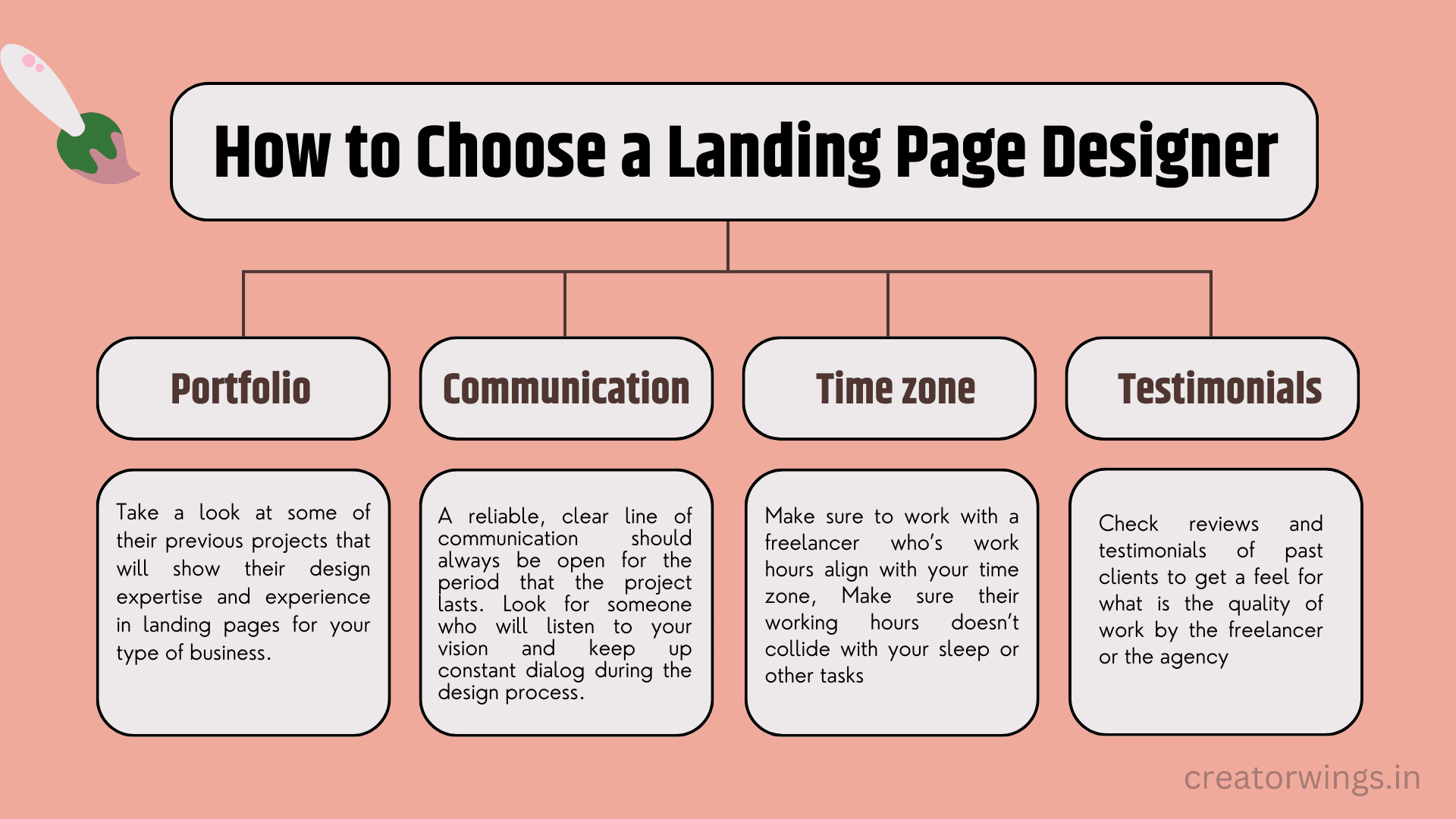
Check out their Portfolio. Take a look at some of their previous projects that will show their design expertise and experience in landing pages for your type of business.
A reliable, clear line of communication should always be open for the period that the project lasts. Look for someone who will listen to your vision and keep up constant dialog during the design process.
Get clear quotes up-front and avoid those with hidden fees. Understand the scope of work that the price includes and what extra costs might come up.
Today’s consumer is more aware of the brand they are dealing with. So, more than ever, it has become essential to choose a designer or agency with whom you will work, bearing your brand’s values in mind. Consider:
How do they work in line with your work ethics, and do they treat the workers with fairness in their sourcing? A designer who is ethical can help you make sure that your brand does not.
By partnering with a designer or agency who shares your values, you strengthen your brand’s overall image and message.
All in all, would you say that project management style of theirs fits with your preferences? Do they provide regular progress updates and, what is more important, stick to the deadlines.
Remember to consider the time zone difference when working with a designer or agency out of your area. Make sure their working hours doesn’t collide with your sleeping hours and other tasks.
Read through the reviews and testimonials of past clients to get a feel for what is the quality of work by the freelancer or the agency
Negotiating Prices and Contracts
So, you’ve nailed down the perfect design partner. What comes next is the hard part: negotiating terms and solidifying your agreement. Learn the nitty-gritty of contracts, helping you ensure you’re getting the most value for your investment. Focus on:
Understanding the Contract: Do not skim through the entire contract; in fact, read through every bit of it and understand each clause, asking questions if not clear about something. That should also include the project timeline, deliverables, termination clauses, etc.
Payment Schedule: Agree on a method of payment that shall work for both of you. It may be milestone-based payments, whereby you pay on completion of a certain stage from the fee agreed upon.
Revision Policy: Clearly stating the number of revisions that are included in the base price. Clearly state what changes are considered as a revision, to avoid confusion.
Who Owns the Final Design Assets: This is very important. Please be sure that the ownership of the final design files is stipulated in the contract to be in your name once the project is through. Then, you could use it for your future marketing efforts without fees.
Red Flags to Watch Out For
Be aware of these red flags in negotiations:
Any firm or agency in the design world that gives too aggressive and ambitious timelines in all possibilities is very likely compromising on quality. Always insist on project deadlines that are reasonable, which might include room for reviews and optimization.
All the hidden costings should be ensured that they are put down on paper in the contract. Caution in regard to surprise fees for extra services and work tweaks.
Any vaguely answered or unwillingly clarified terms, or on the whole lack of communication from the side of the designer or agency, could be a signal to future difficulties with that person.
Negotiation is a collaborative process; both parties have to arrive at a fair agreement on the terms and feel that he is paying a fair price for their work.
Future Trends in Landing Page Design and Pricing
The world of landing page design is always changing. Here are a few trends that we expect will change up the game for how the average landing page looks, feels, and is priced in the very near future.
Such as the case of a new travel destination, experience a 360° product tour of the same through the landing page. Virtual Reality (VR) and Augmented Reality (AR) can change the way landing pages are designed and enable businesses to create spectacular experiences that may raise the levels of engagement and conversion.
Video content is already a very interactive medium, and its use on landing pages will increase that tendency even further. From short explainer videos to interactive product demos, literally in a split second, videos can do a great job at successfully capturing attention and at once explaining even complex messages in no time.
The only difference, which makes them “privacy-aware,” is the consent and control over such data. As data privacy regulations change, the landing pages will have to change as well to cater to the new way user data is used for personalization. Striking a balance between relevance in content and respect for user privacy will, therefore.
AI Generated Content and AI enhanced features like chatbot and analytics will help in understanding customer journey and customer behavior for better sales and conversions
Conclusion
With a good high-quality landing page, you will help get your conversions and receive a good ROI. So forget those old templates and take the best of design with this one. Your future conversions (and your budget) will appreciate it!
Now, it’s your turn! Do you have any experience in landing page design? Good or bad, share with us in the comments section below! Let’s hear your stories so that we may give some tips based on your experience to inspire or assist others.
Hi, I’m Aboorva,I have started my Second Innings as a Freelance Content Writer!
I balance motherhood with a passion for creating high-ranking blogs, especially for SaaS businesses.